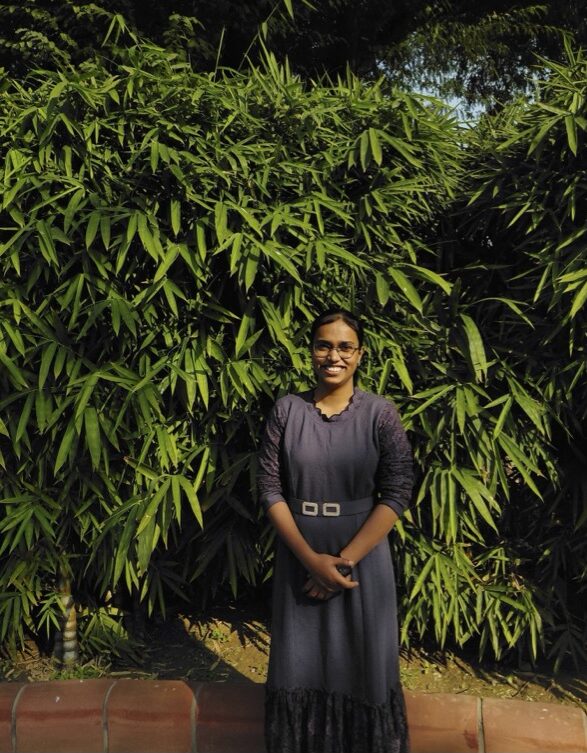
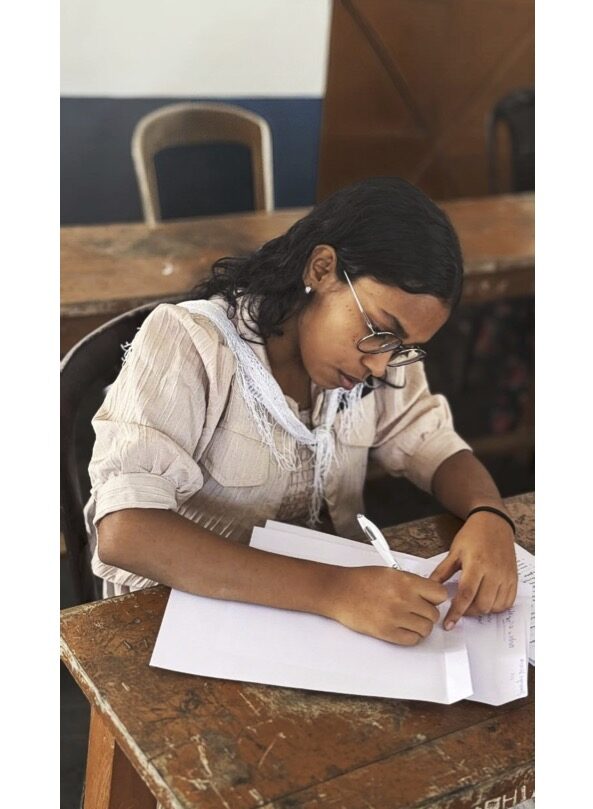
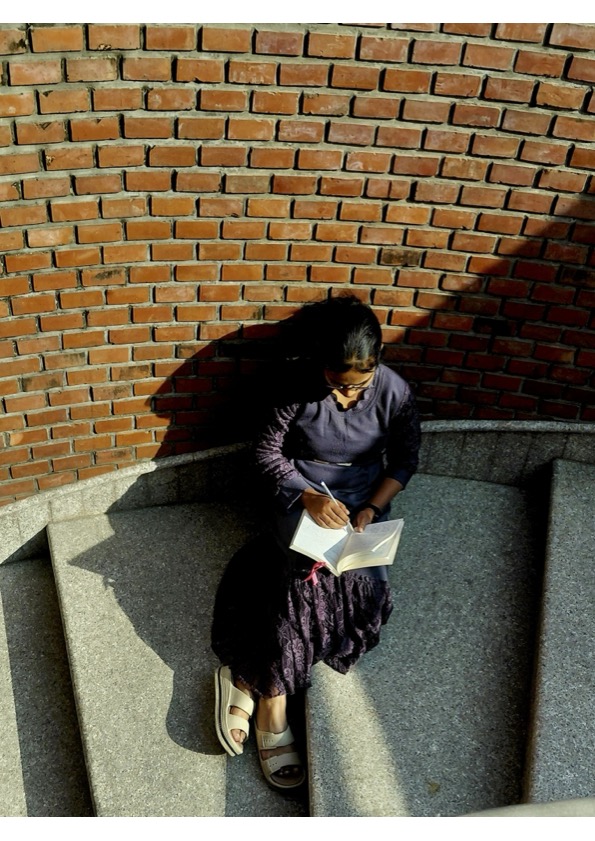
A workshop filled with the sound of tools, a small patch of rubber farming, and a history classroom hundreds of kilometres away in Delhi – these are all part of Rosit Mathew’s story. At first glance, they may seem unrelated. But for Rosit, they are deeply connected. Every chapter of her education has been shaped by her family’s hard work, quiet sacrifices, and an unwavering belief that learning can open doors to a different future.
Originally from Kolichal in Kerala, Rosit is currently pursuing a B.A. (Honours) in History at Jesus and Mary College, University of Delhi. Moving away from home to study was a significant step, one that her parents supported despite the financial challenges they continue to face.
Her father runs a small car workshop, which serves as the family’s primary source of income. Alongside this, the family also manages a modest rubber and banana farm. However, years of balancing household expenses, agricultural responsibilities, and mounting medical expenses for Rosit’s grandfather have forced the family into debt through bank loans and borrowings. Even in the face of these challenges, Rosit’s parents never allowed financial hardship to become a reason for limiting their daughter’s aspirations.
What has stayed with Rosit through every difficult moment are her father’s simple but powerful words: “Study as much as you want; in the end, don’t regret your choice.” Those words became more than encouragement; they became a promise that education would always remain a priority, no matter how difficult the circumstances.
For Rosit, studying history is not just about understanding the past. It is about asking questions, uncovering forgotten narratives, and appreciating the diversity of India’s heritage. She believes that South Indian history deserves greater attention and hopes to contribute to that field through research in the future. Her long-term goal is to pursue a Master’s degree, work with the Archaeological Survey of India, and eventually complete a PhD. If that path takes a different turn, she hopes to work as a museum curator, sharing history with people in ways that make it engaging, relevant, and meaningful.
At college, Rosit is also an active member of the Women’s Study Centre (WSC), where she engages in discussions on feminism, gender, and social issues. These experiences have broadened her perspective and strengthened her understanding of how history continues to influence contemporary society.
Yet Rosit remains grounded in practical realities. Before pursuing research, she wants to become financially independent. She understands the responsibilities her family carries and hopes to build a career that allows her to support them while continuing to follow her academic interests. To her, financial independence is not separate from her dreams, it is the foundation that will make them possible.
Receiving the Shiksha Sankalp Lakshya Scholarship has eased a significant part of the financial burden that her family has been carrying. More importantly, it has reassured Rosit that people and organisations are willing to invest in the aspirations of students who are determined to make the most of every opportunity. The scholarship allows her to focus more fully on her education without constantly worrying about the financial sacrifices being made back home.
Rosit’s journey is defined by persistence, gratitude, and a quiet determination to honour her parents’ faith in her. As she continues her studies at the University of Delhi, she carries with her not only a passion for history but also a deep sense of responsibility – to her family, to her community, and to the stories she hopes to preserve for future generations.
Some journeys begin with a destination in mind. Rosit’s began with a simple promise made by her father: to study without regret. Today, with the support of the Shiksha Sankalp Lakshya Scholarship, she is steadily turning that promise into a future built on knowledge, purpose, and hope.