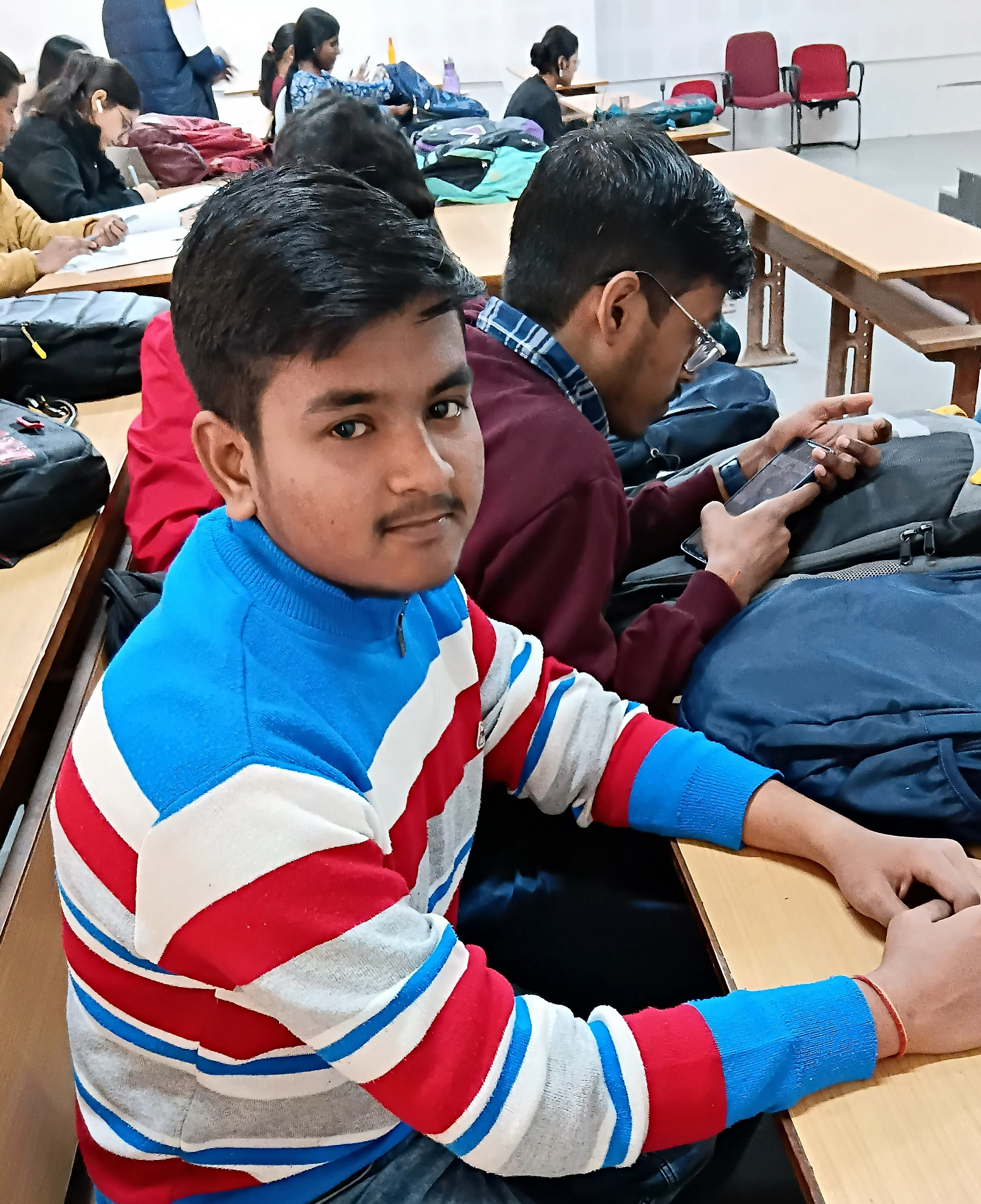
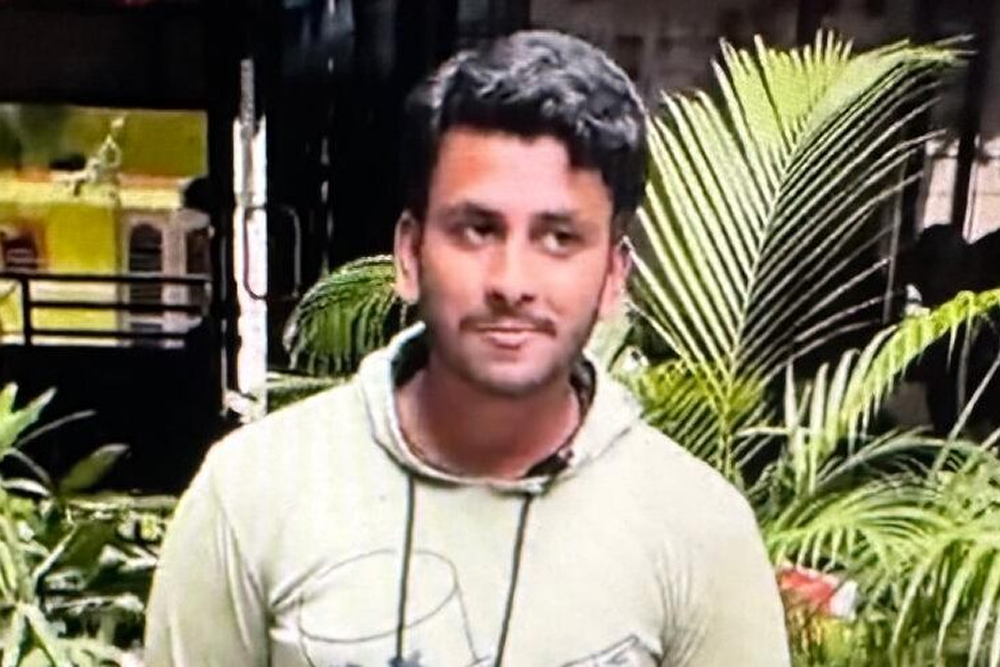
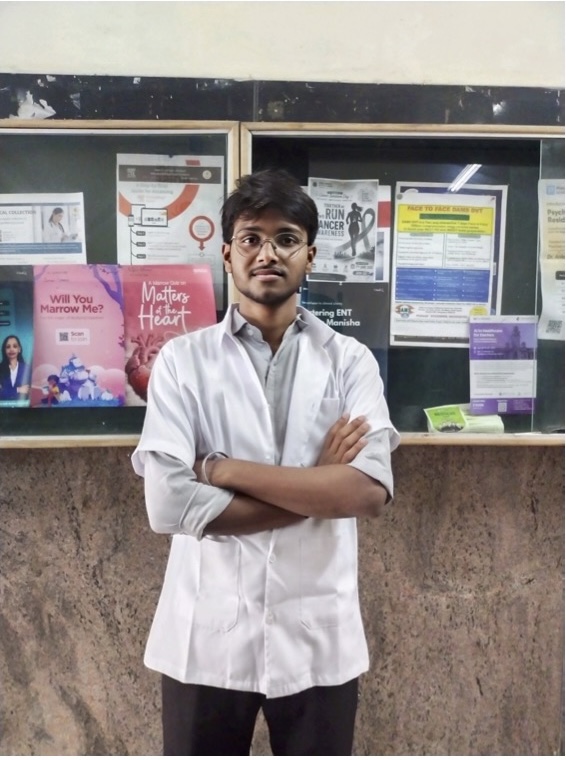
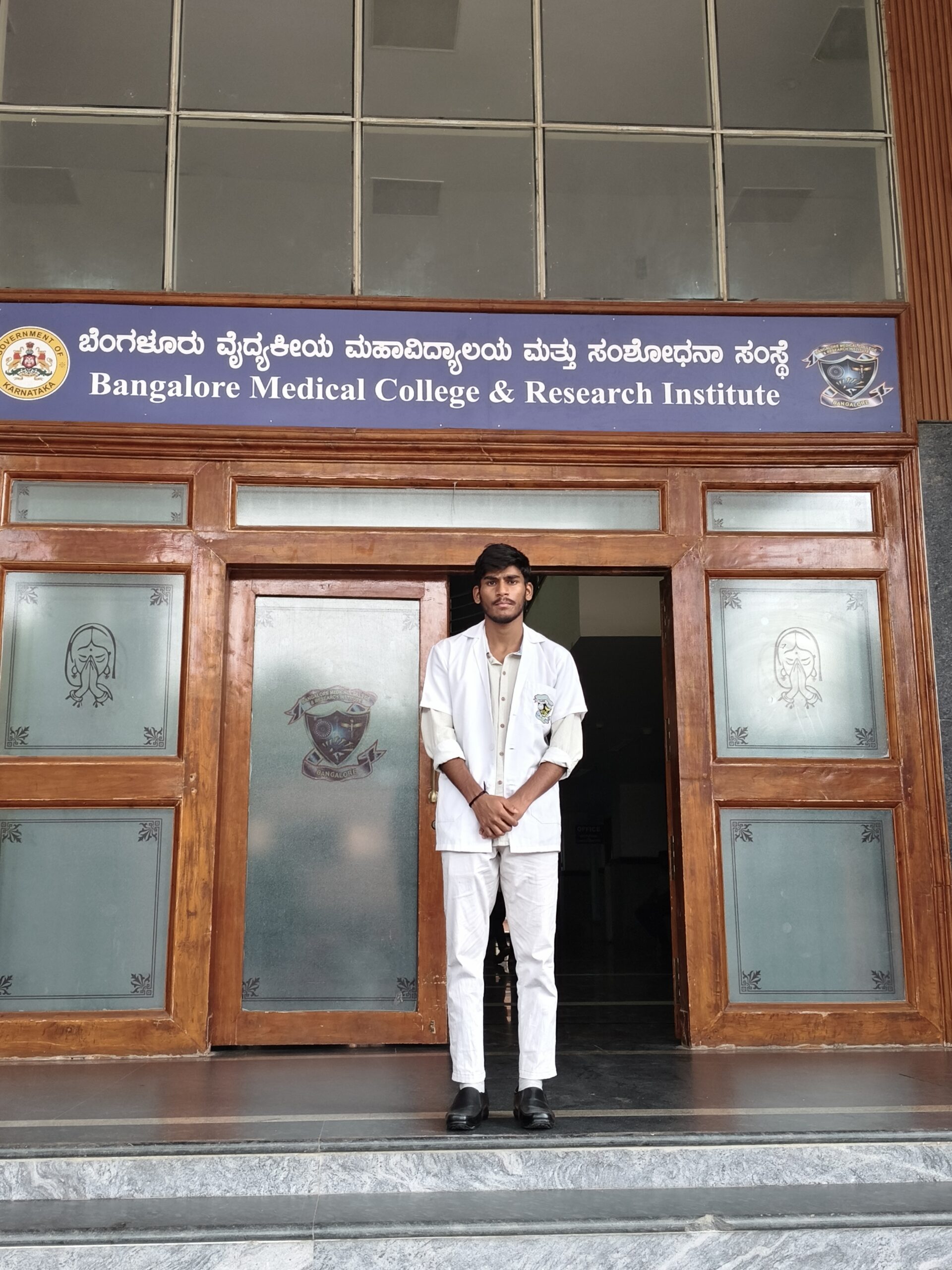
Uday Raj grew up knowing responsibility early. As the eldest of three, with two younger sisters looking up to him, effort and consistency were never optional. That discipline showed in his Class 10 results, a strong 93.28 percent that reflected not just intelligence, but steady commitment.
Then life shifted. While preparing for his Class 12 board examinations, Uday lost his father. The loss was not only emotional but structural. The family’s stability fractured overnight, and the household began to rely on a modest income from small-scale farming managed by his aging grandfather. At an age when most students are concerned only with marks and admissions, Uday was suddenly navigating grief, uncertainty, and the quiet pressure of being the one who had to hold things together.
What carried him forward was not optimism, but purpose. His father had believed deeply in education as a way forward, and Uday chose to treat that belief as a responsibility rather than a memory. He continued to show up for his studies, even as family roles shifted and the future felt fragile.
At Matha National Public School in Bangalore, Uday found clarity in technology. Computer science appealed to him not as a trend, but as a discipline built on logic, problem solving, and structure, qualities he had learned to rely on in his own life. His focus remained steady, even when circumstances made distraction easy. That focus earned him admission to the BE Computer Science program at Acharya Institute of Technology, Bangalore. The cost of registering for college, however, demanded another sacrifice. His grandmother sold her small holdings of gold, a reserve meant for security, to ensure Uday could take that next step. It was a quiet act of faith, one that placed the future in his hands.
Through the support of the Shiksha Sankalp Society, Uday can now continue his education without the constant weight of financial uncertainty. For him, this support is not just assistance; it is trust. And he intends to justify it.
Uday does not see education as personal escape. He sees it as continuity, a way to strengthen his family and, in time, to contribute to communities that face the same fragile intersections of loss and limitation. His story is not about triumph over adversity. It is about steadiness, about choosing direction when circumstances offer none, and about moving forward with quiet resolve.